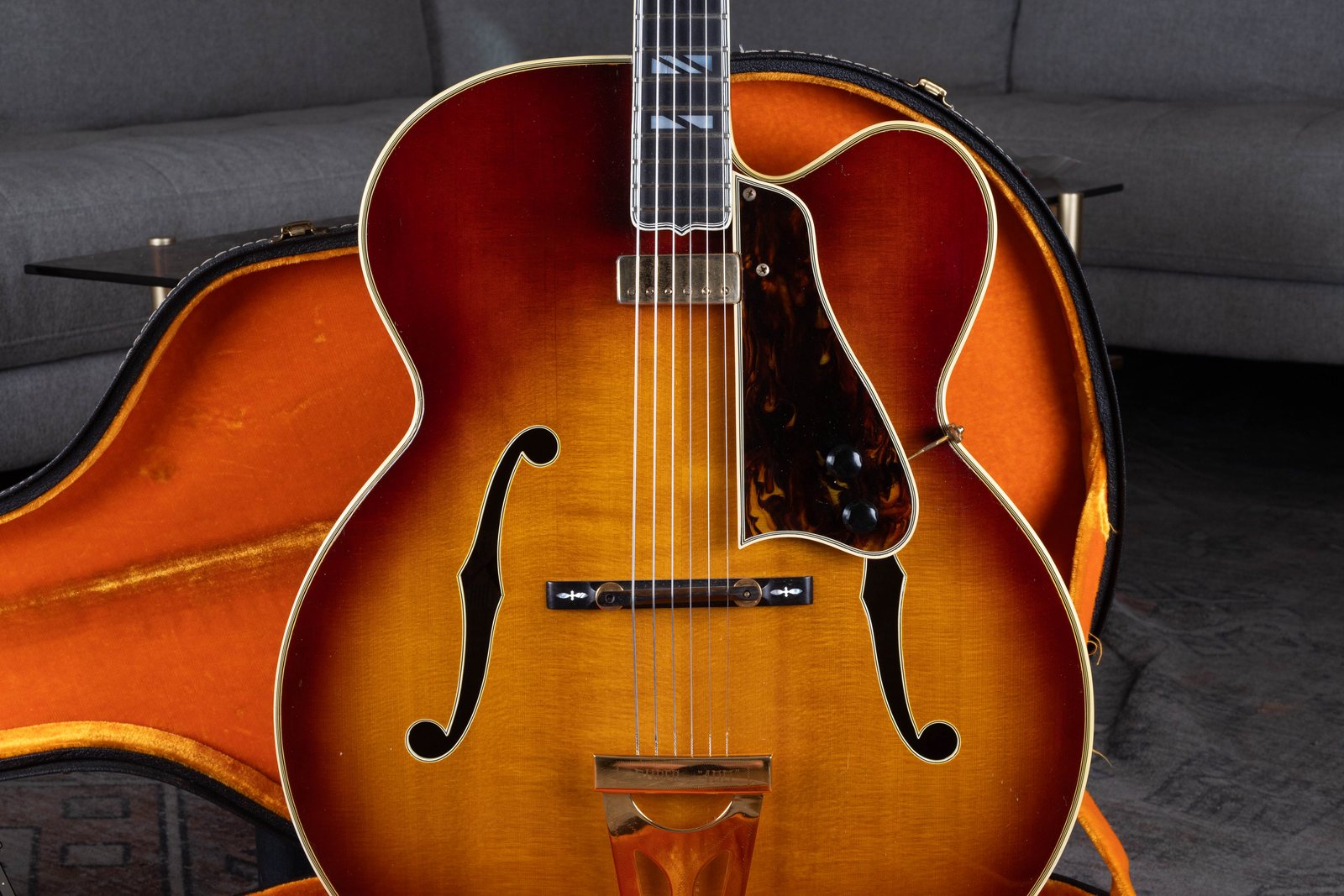
1. Confirm The 18-Inch Body
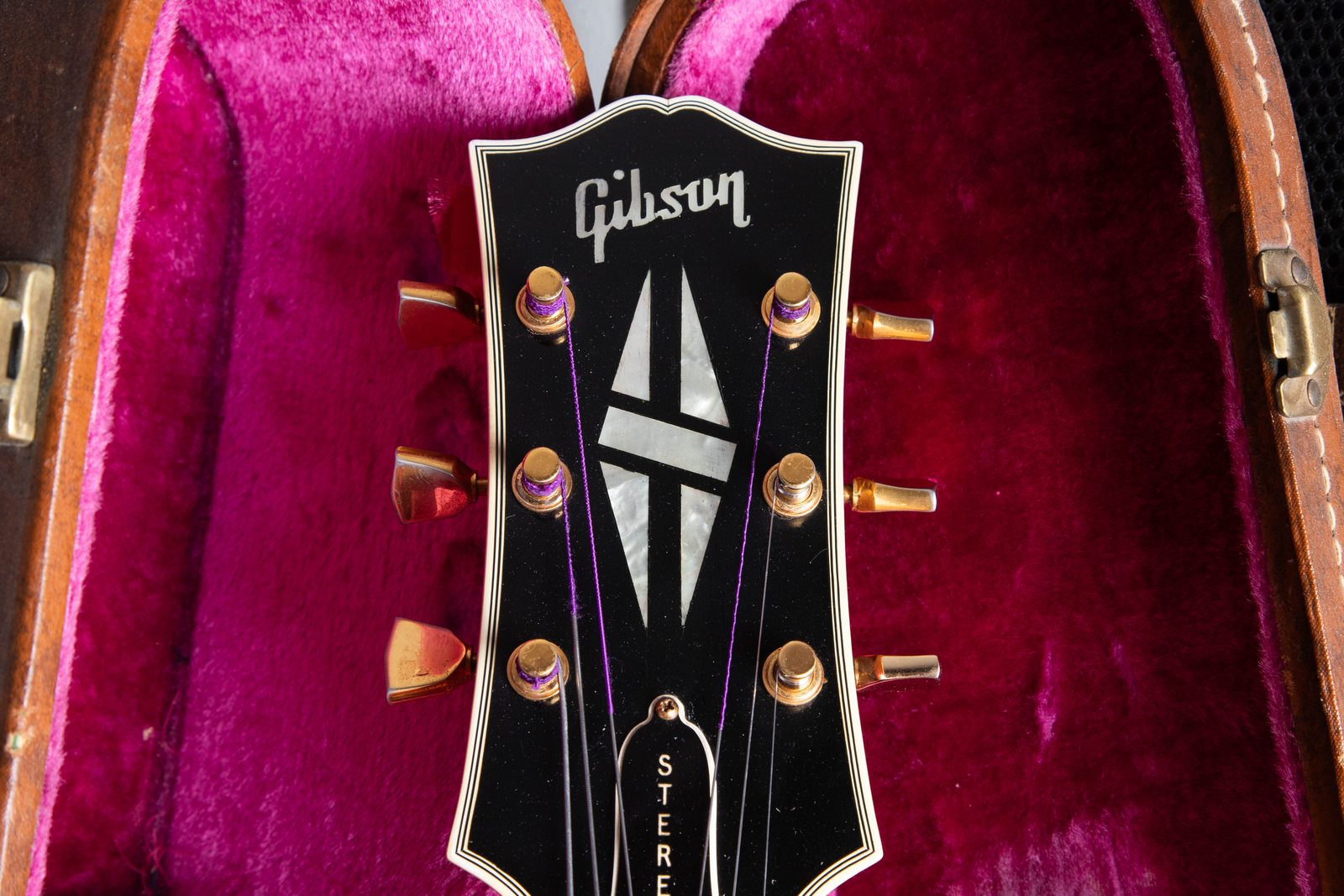
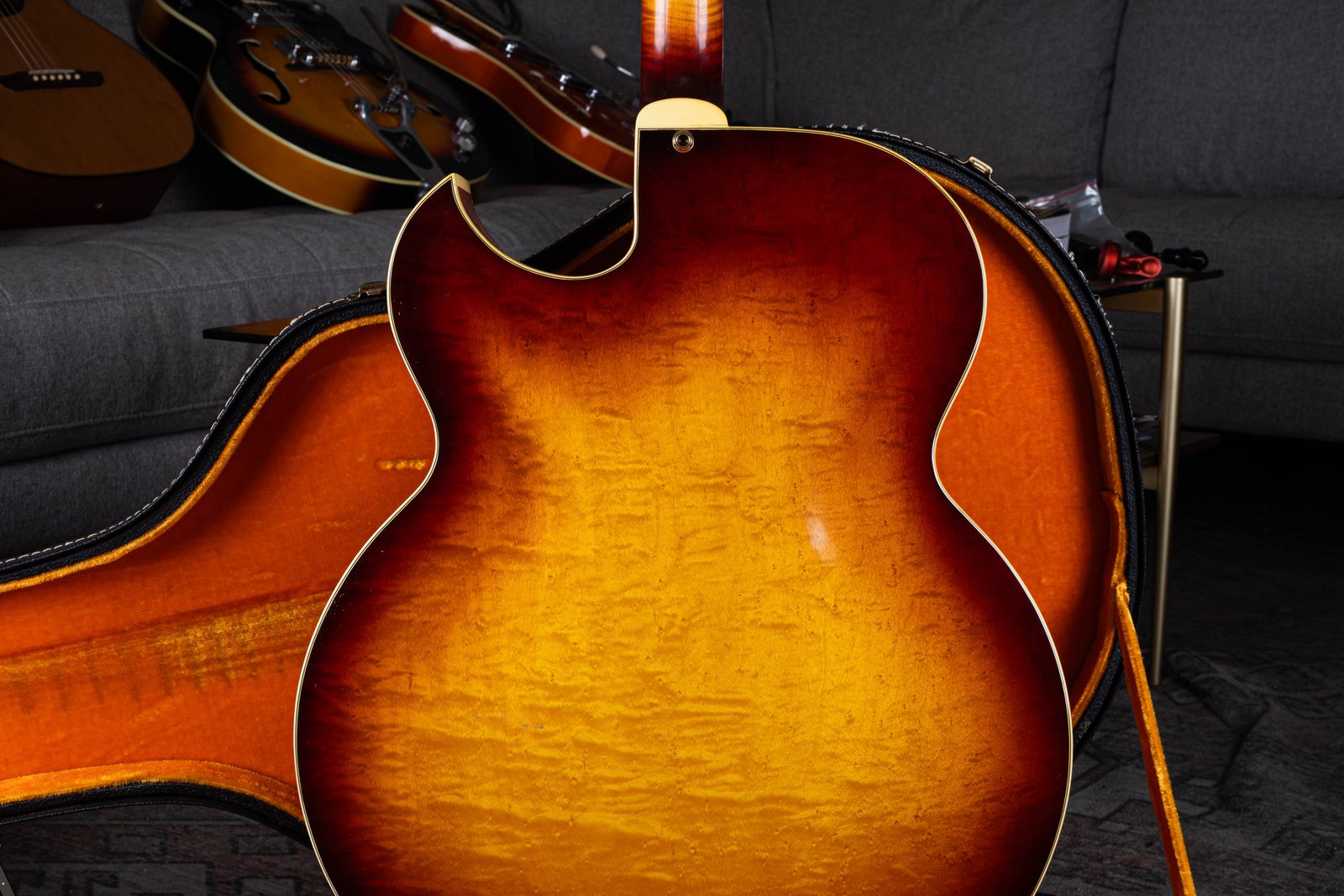
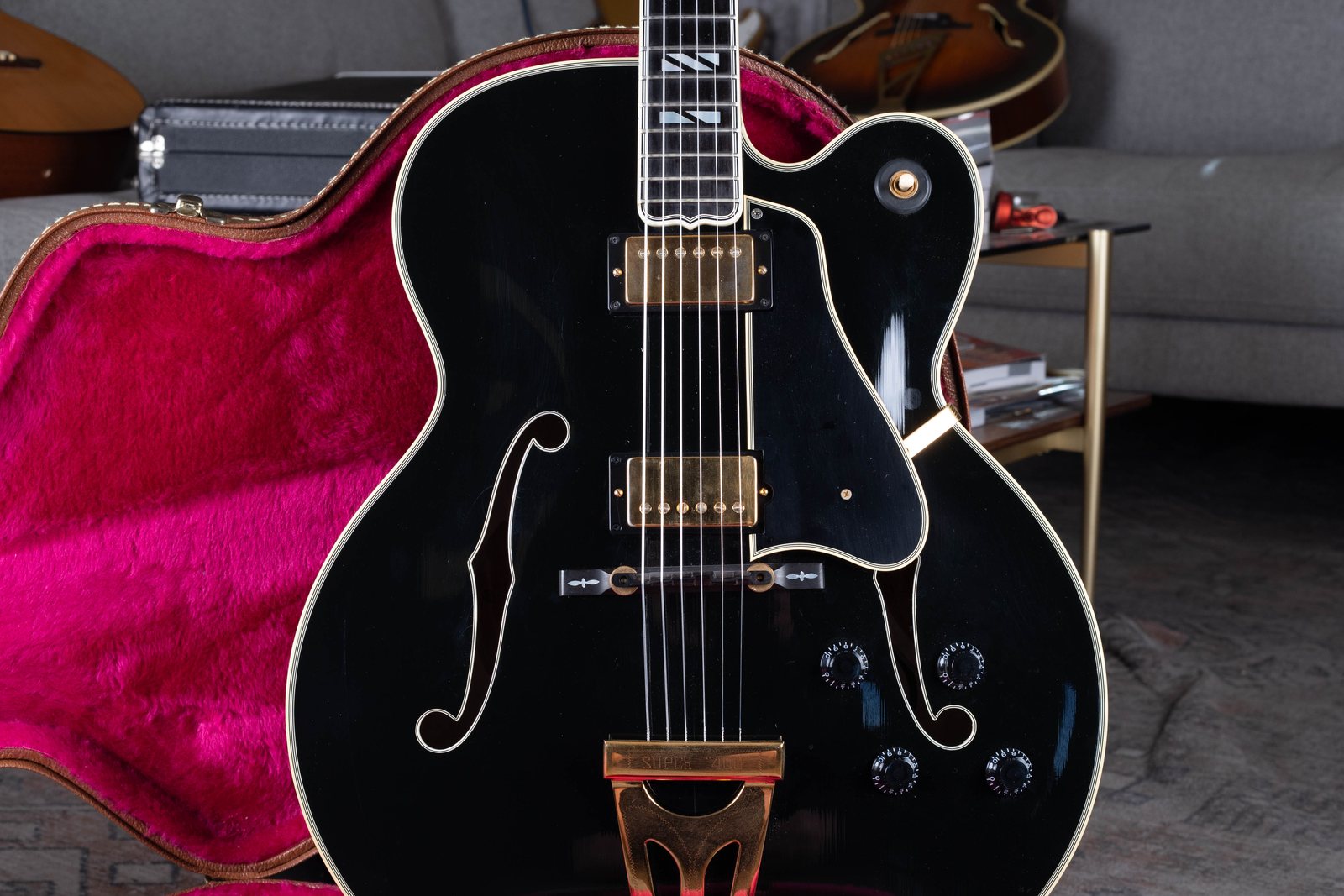
A full-size Super 400 is approximately 18 inches across the lower bout, with a carved spruce top and maple back and sides. The scale is normally 25½ inches. The 17-inch L-5CES can look similar in photographs, but the Super 400’s larger body, split-block fingerboard inlays, and split-diamond headstock separate the two.
| Lower bout | 18 inches |
|---|---|
| Top | Carved spruce |
| Back and sides | Maple, often strongly figured |
| Fingerboard | Ebony with split-block pearl inlays |
| Scale | 25½ inches |
2. Use The Cutaway To Place The Era
- Non-cutaway: the original acoustic form; vintage production ends in the mid-1950s.
- Rounded Venetian: offered from 1939, used on the 1950s CES, and returned around 1969.
- Pointed Florentine: the dominant CES profile from about 1960 through 1968.
A cutaway places the guitar in a broad window, not a single year. Transitional examples exist.
3. Identify The Pickup Era
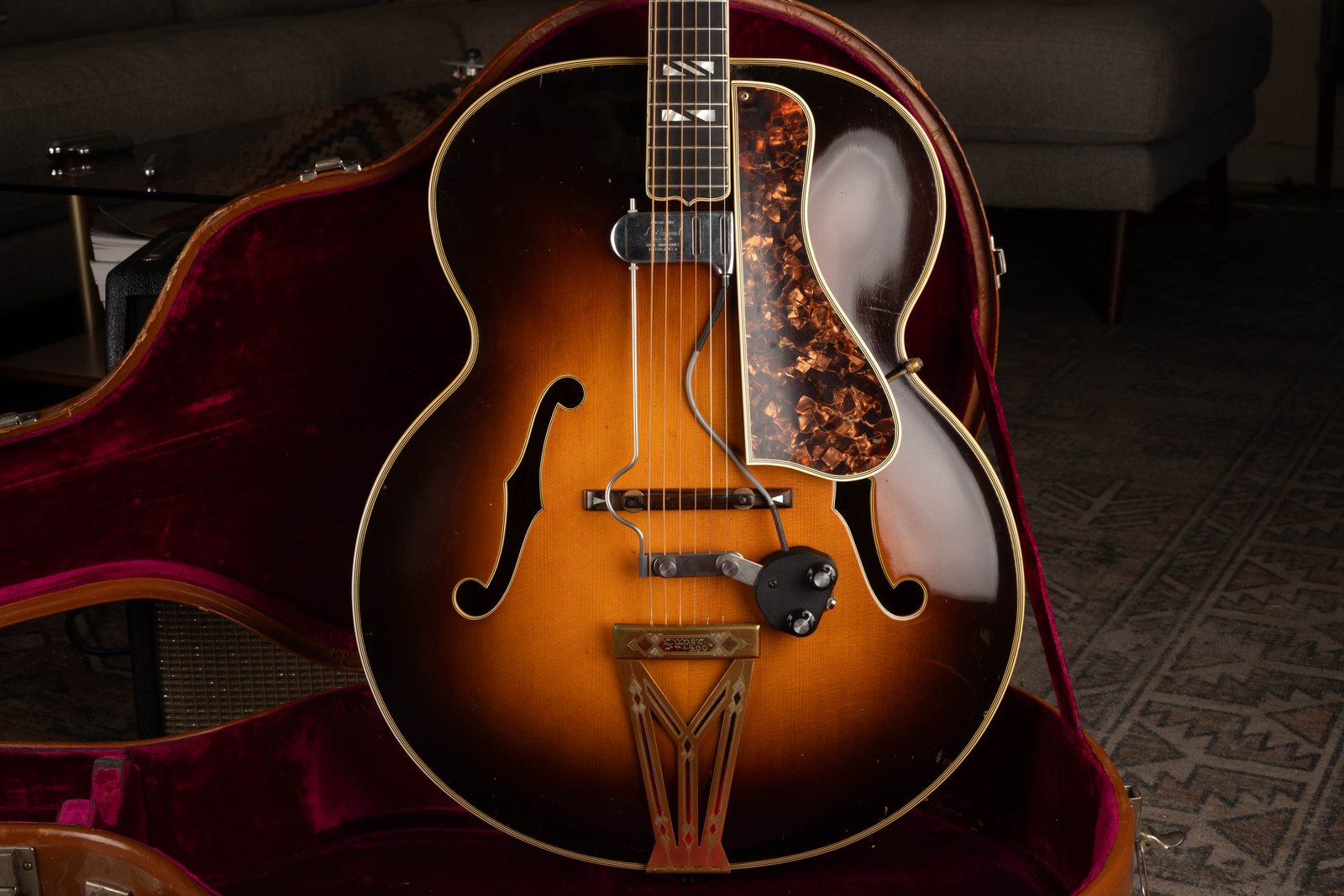
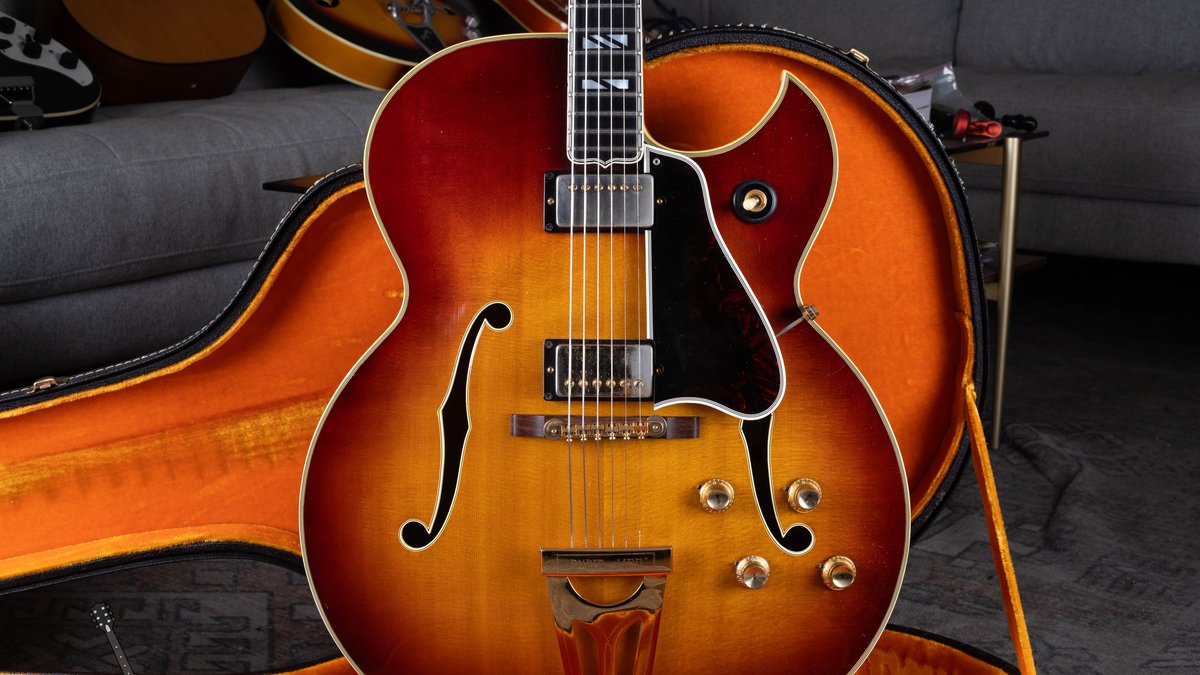
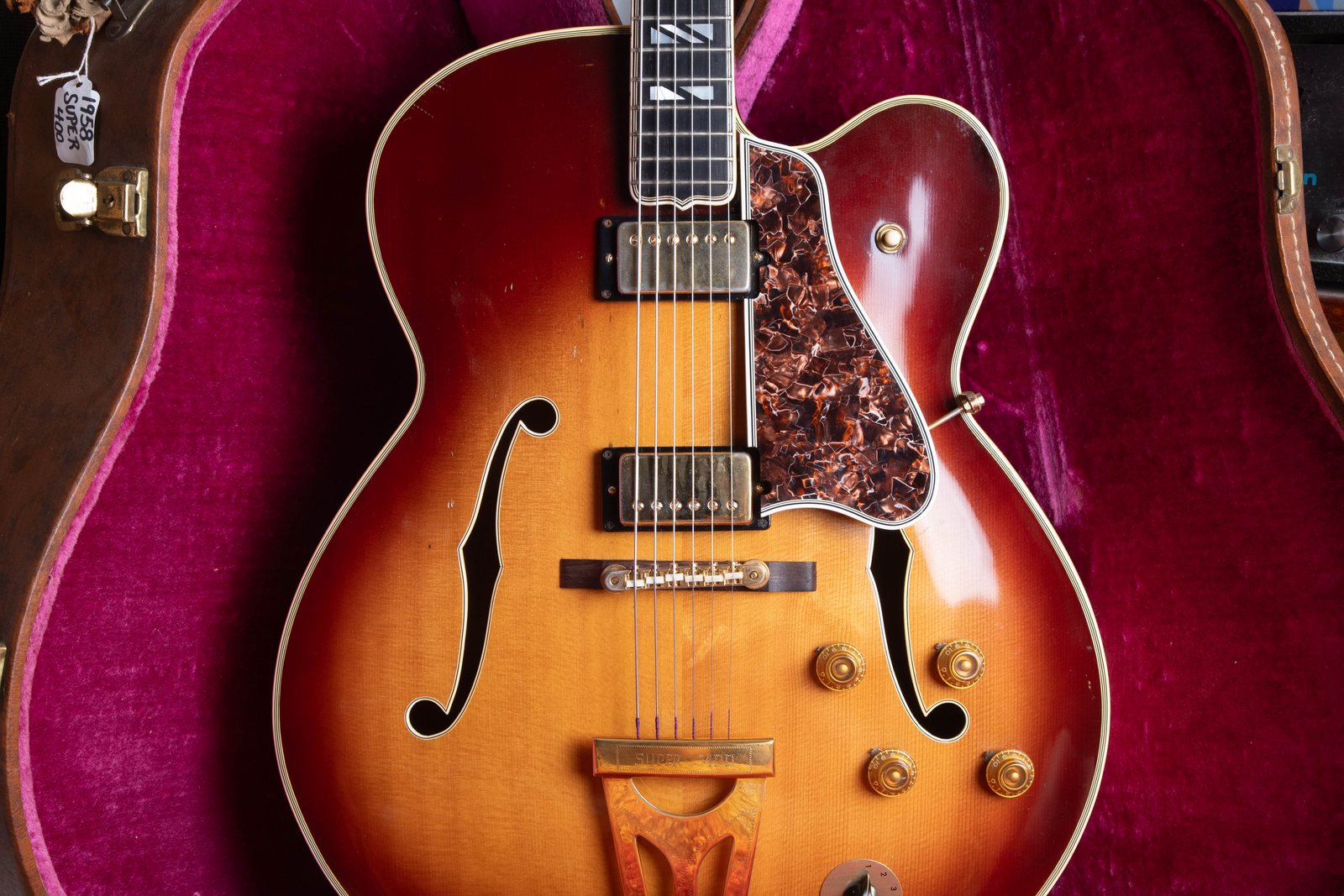
The Super 400CES begins with two P-90s in 1951. Alnico V staple pickups appear around 1953 and continue into 1957. Humbuckers begin in late 1957, followed by PAF, Patent Number, T-Top, and later Gibson units. Pickup transitions overlap, and valuable original pickups are sometimes replaced, so inspect the construction, leads, solder joints, rings, and routs before drawing a conclusion.
4. Check Label, FON, Serial, And Pot Codes
Look through the bass-side f-hole for the factory label and model designation. On earlier instruments, a factory order number may add context. Compare the headstock serial with Gibson’s numbering system, but be careful: 1960s serial ranges repeat and overlap. Potentiometer codes can establish the earliest possible assembly date for an electric guitar, while a “Made in USA” stamp points to 1970 or later.
5. Study The Super 400 Details
Expected appointments include split-block pearl fingerboard inlays, a split-diamond headstock inlay, extensive multi-ply binding, gold hardware, an ornate tailpiece, and premium tuners. Early acoustic examples may have hand engraving and other details that changed before the war. Later neck laminations, tuners, knobs, bridges, and finish colors vary by period.
6. Separate Age From Originality
Year matters, but originality and condition can move the price just as much. Check for refinishing, overspray, repaired headstock breaks, top cracks, changed pickups or tuners, altered electronics, replaced pickguards, and non-original bridges or tailpieces. Keep the original case, tags, receipts, and family photographs with the guitar.
Documented public sales reviewed in 2026 ranged roughly from $7,400 to $18,500 for CES examples, depending on year and condition; asking prices can be higher. A specific guitar needs current comparable sales and a hands-on originality assessment.