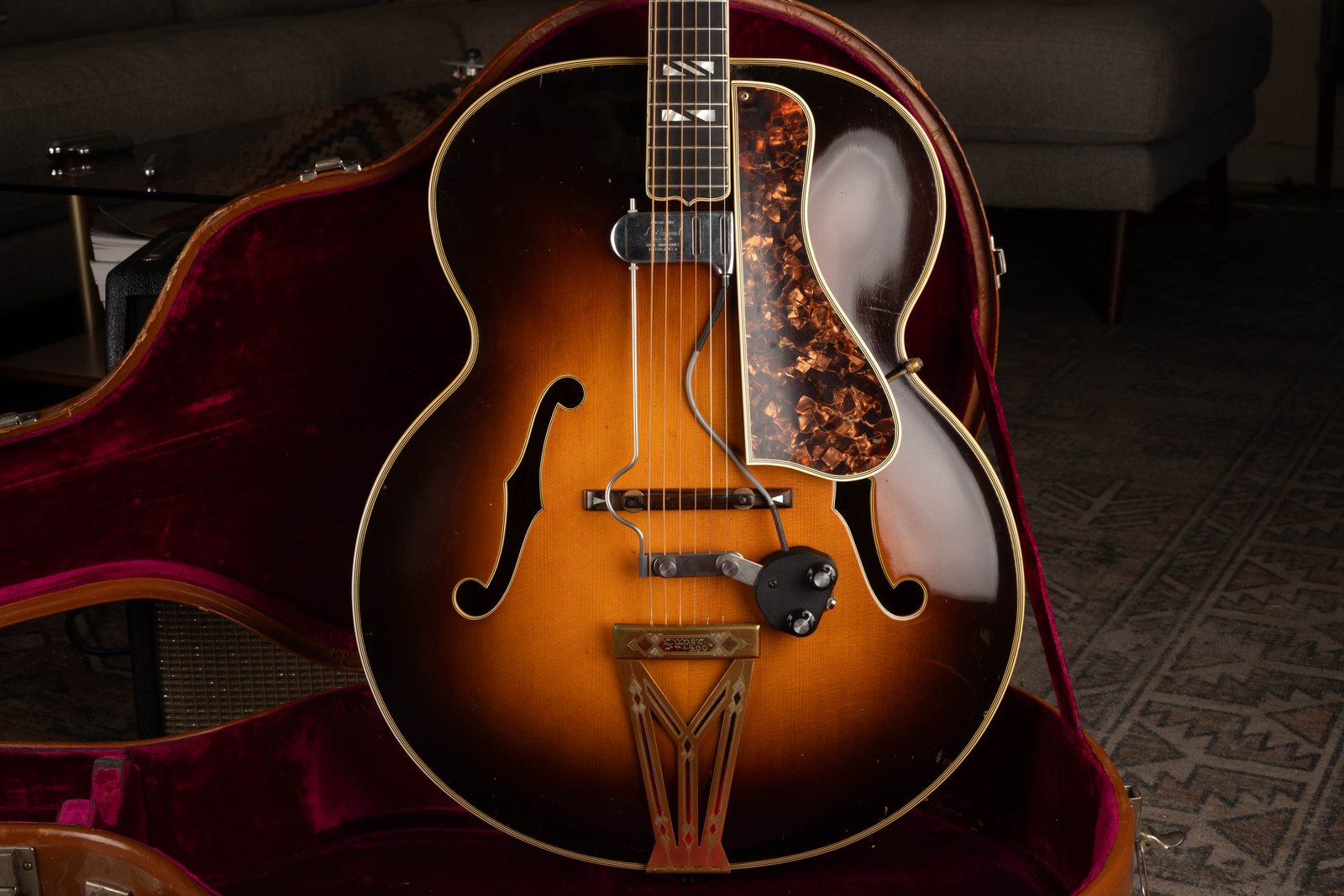
The $400 Flagship
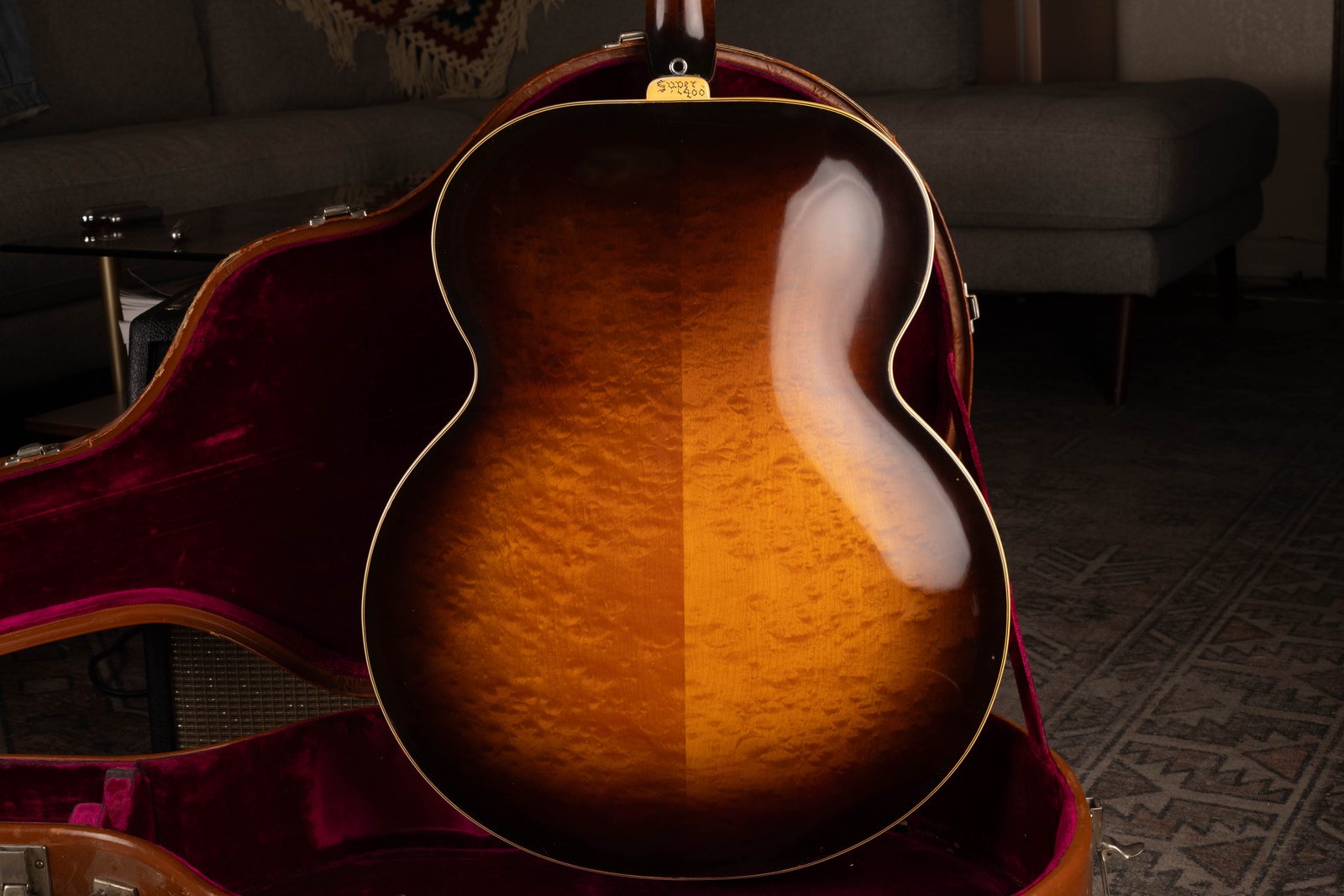
Gibson introduced the acoustic Super 400 in 1934. Its name came directly from its $400 list price—an extraordinary figure during the Depression. At 18 inches across the lower bout, it was the largest production guitar Gibson had built and sat above the L-5 in the catalog.
The construction announced its rank: carved spruce top, figured maple back and sides, ebony fingerboard, gold hardware, split-block pearl inlays, a split-diamond headstock, elaborate multi-ply binding, and an engraved tailpiece. The size was practical as well as theatrical. Before guitar amplifiers became standard, the Super 400 was built to project through a dance orchestra.
The Prewar Changes
Early guitars carried details collectors now study closely, including a hand-engraved finger-rest support and, on the earliest examples, an “L-5 Super” truss-rod cover. Gibson widened the upper bout during the late 1930s. In 1939 it enlarged the f-holes, revised the tailpiece, moved to parallel bracing, and introduced a rounded Venetian-cutaway version called the Super 400 Premier, later the Super 400C.
The Super 400CES Arrives
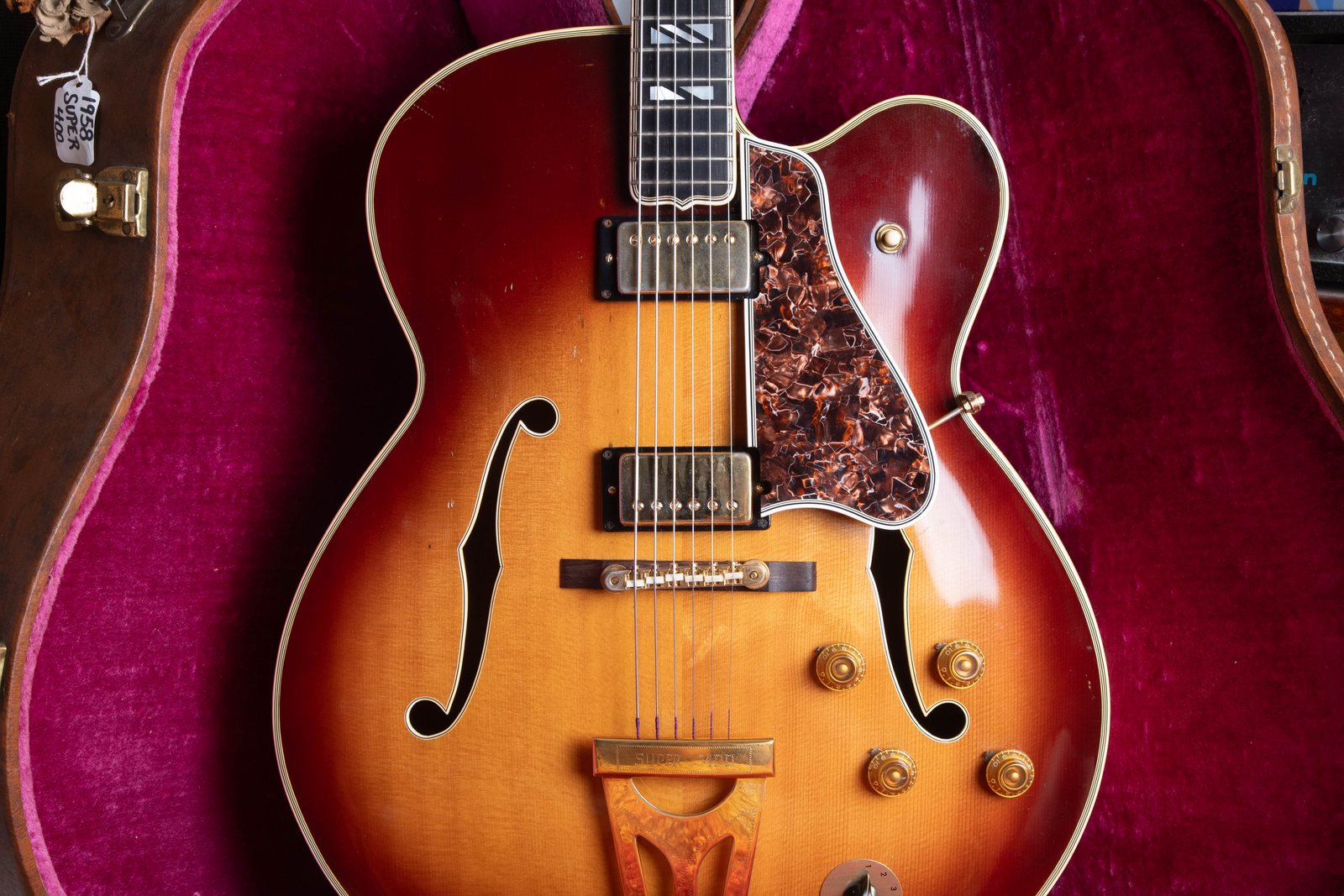
In 1951 Gibson introduced the Super 400CES—Cutaway Electric Spanish—with two factory pickups, separate volume and tone controls, and a three-way selector. Only two sunburst examples appear in Joe’s first-year shipping total. The CES began with P-90 pickups, changed to Alnico V “staple” pickups around 1953, and began receiving humbuckers in late 1957.
The electric model used a carved top intended to behave better under amplification. It retained the 18-inch body, 25½-inch scale, ornate split-block inlays, and Super 400 tailpiece. Its full, wide body distinguished it immediately from the 17-inch L-5CES.
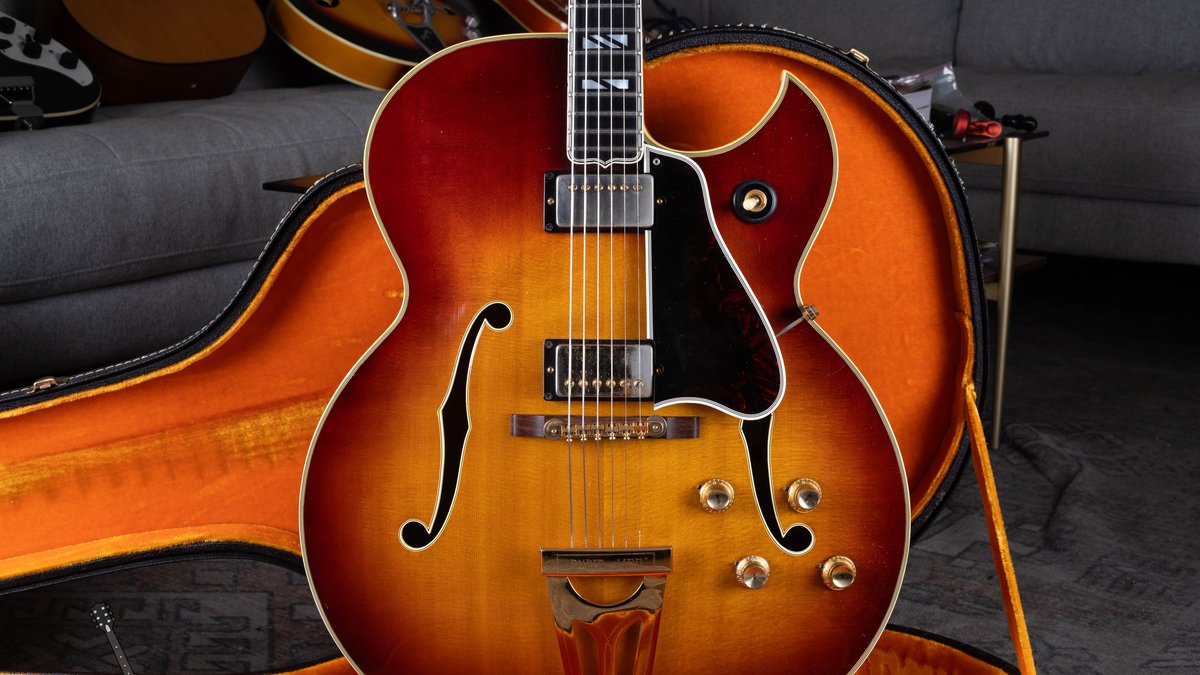
Venetian, Florentine, Then Venetian Again
The rounded Venetian cutaway defines the earliest cutaway Super 400s and the 1950s CES. Around 1960 Gibson adopted the pointed Florentine cutaway. Around 1969 the rounded Venetian profile returned. These dates are best treated as transition windows, because Gibson regularly used existing parts and mixed features around a changeover.
On Stage With American Music
Early adopters used the acoustic Super 400 to compete with large bands. Les Paul was photographed with one before his solidbody years. Scotty Moore played a natural Super 400CES with Elvis Presley in the 1950s, and Elvis borrowed Moore’s black 1963 Super 400 during the 1968 television comeback special. Merle Travis, Kenny Burrell, and other country and jazz players also became associated with the model.
The Standard For A Grand Archtop
The non-cutaway acoustic disappeared after the mid-1950s and the cutaway acoustic eventually left regular production, but the CES endured through later Gibson and Custom Shop eras. The design influenced builders including John D’Angelico and Elmer Stromberg, and its split-block and split-diamond ornament became shorthand for the highest level of Gibson appointments.